Predatory lending is lending designed to profit from a borrower’s difficulty rather than their success. Unlike loan sharking, much of it is legal. The loans are licensed, the paperwork exists, and the rates are technically permitted, but the product is built so that struggling is more profitable than repaying. This guide explains how to recognize predatory loans, the main types, and what to do if you are already in one.
What makes a loan predatory
No single feature defines it. Predatory lending is a pattern, and the pattern usually includes several of these:
- Pricing that only works if you fail. The lender’s real profit comes from rollovers, refinancing, late fees, or repossession rather than scheduled repayment.
- Structures that hide the true cost, such as fees in place of interest, balloon payments, or short terms that force renewal.
- Loan flipping, repeated refinancing that adds fees each time while the balance grows.
- Packing, add-on products like credit insurance folded into the loan without meaningful consent.
- Asset-based lending, approval based on what can be taken from you, a car title or home equity, rather than your ability to repay.
- Targeting, marketing aimed at people with the fewest alternatives: low income neighborhoods, older homeowners, military families, and borrowers with damaged credit.
The individual red flags are cataloged in predatory loan warning signs.
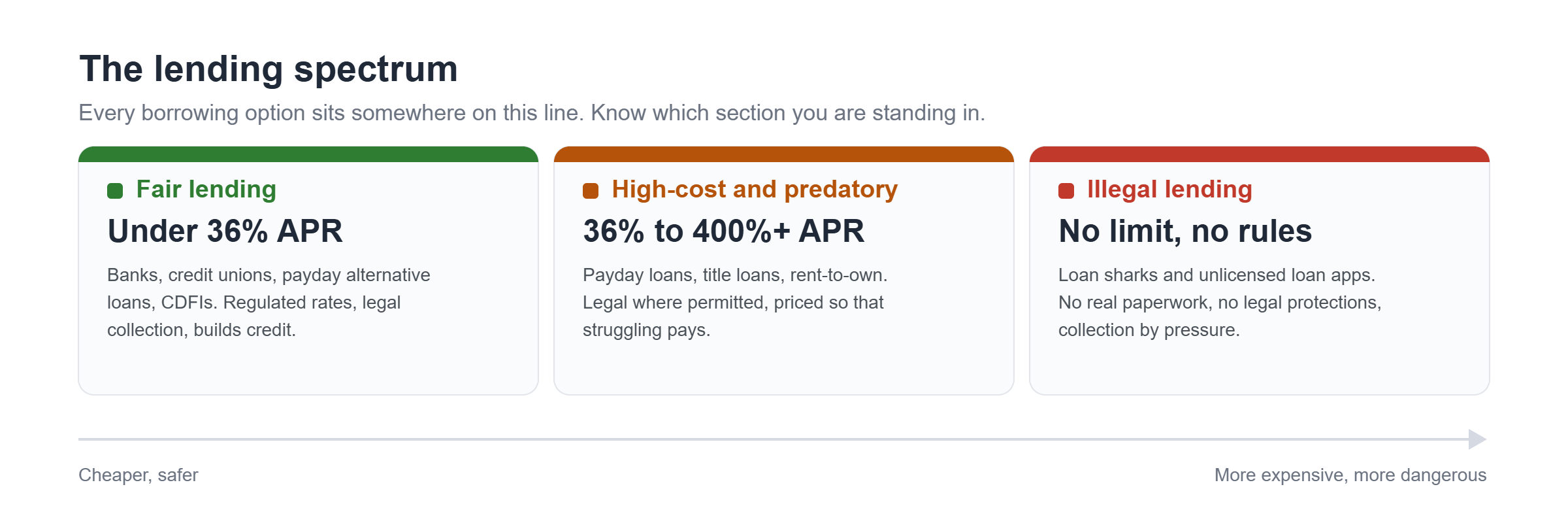
The main types of predatory lending
Payday loans
Small two week loans whose fees work out to roughly 400 percent a year, built around the likelihood that the borrower cannot repay in full and will pay the fee again. Covered in depth in payday loans.
Title loans
Loans secured by your car’s title at around 300 percent a year, where the endgame for a meaningful share of borrowers is losing the car. Covered in title loans.
High-cost installment and subprime loans
Longer term loans at 36 percent and well above, often loaded with add-on products and refinanced repeatedly. The structure looks more respectable than a payday loan while extracting more money over time.
Rent-to-own and buy-here-pay-here
Furniture, appliances, and cars sold through payment structures that can total several times the item’s cash price, with repossession absorbing the borrower’s equity when payments slip.
Illegal lending
At the far end of the spectrum sits lending with no license and no legal limits at all. That is the territory of loan sharks, including today’s unlicensed loan apps and websites.
The laws that protect you
The Truth in Lending Act requires every legal lender to disclose an annual percentage rate and total cost before you sign. State usury and small loan laws cap rates for many loan types, and some states ban payday or title lending outright. The Military Lending Act caps rates at 36 percent for active duty service members and their families. The Consumer Financial Protection Bureau takes complaints about lenders, and your state attorney general enforces state law. A lender that hides its APR is violating the most basic rule there is.
If you are already in a predatory loan
You have more options than the lender suggests. A nonprofit credit counselor can often restructure or consolidate high cost debt, some states require payday lenders to offer no cost extended payment plans, and refinancing through a credit union or other safer lender can cut the rate dramatically. If the lender turns out to be unlicensed, different rules apply entirely, and they favor you: see our debt help page.
Frequently asked questions
Is predatory lending illegal?
Some of it. Specific practices violate federal or state law, and unlicensed lending is illegal outright. But many predatory products operate legally within permissive state rules, which is why recognizing the pattern matters more than assuming the law has filtered the market for you.
What is the difference between a predatory lender and a loan shark?
A license. A predatory lender operates inside the legal system and can be complained about, sued, and regulated. A loan shark operates outside it. The comparison is drawn fully in loan sharks vs payday loans.
What APR counts as predatory?
There is no official line, but 36 percent is the threshold used by the Military Lending Act and many consumer advocates, and most mainstream credit stays well below it. Above 36 percent, the burden of proof should be on the loan to justify itself.
This page is general information, not legal or financial advice. Last reviewed August 2026.