Illegal lending is far older than the phrase loan shark, but the American version of the story has a clear arc: from the salary lenders of the industrial age, through the organized crime rackets of the mid twentieth century, to today’s unlicensed online lenders. Understanding that history explains a lot about how loan sharks still operate now.
Before the name: usury through the ages
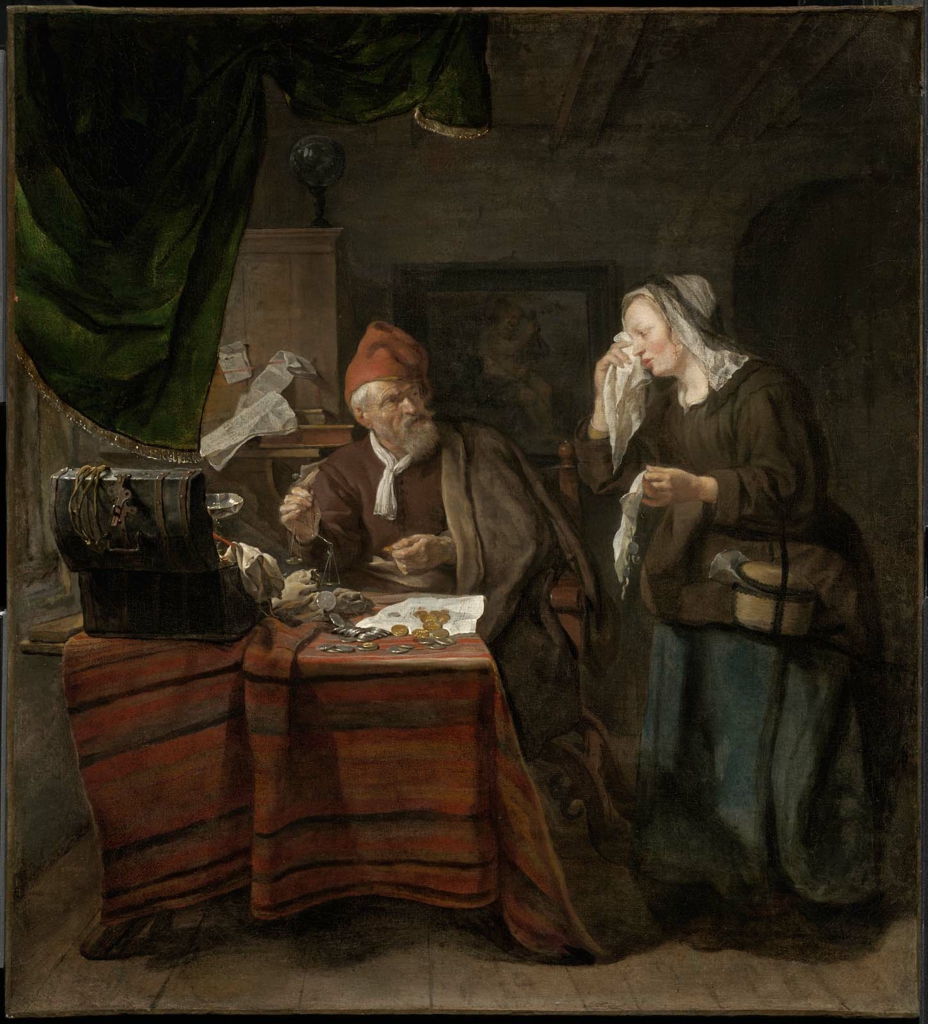
Nearly every society that used money has tried to limit the price of borrowing it. Ancient Babylonian law capped interest, classical Greece and Rome debated it, and medieval Europe banned usury outright for centuries, which pushed lending to the margins of society and attached lasting stigma to the trade. Wherever legal credit was scarce, informal lenders filled the gap on their own terms. That pattern, scarcity of legal credit creating space for predatory informal credit, repeats through every era that follows.
Where the term “loan shark” comes from
The phrase is American, emerging in newspapers in the late 1800s alongside land shark and other predator labels of the day. It described the new urban lenders who circled wage earners the way sharks circle swimmers. By the early 1900s, anti loan shark campaigns run by newspapers and civic reformers had made the term a household phrase, and it has never left the language.
The salary lenders, 1880 to 1920
The first Americans widely called loan sharks did not break legs. They ran offices. Salary lenders advanced small sums against a worker’s next paycheck at rates commonly around 10 to 20 percent per month, dressed up through fees and fictions to dodge usury laws. Borrowers signed over wage assignments, and the threat that kept them paying was not violence but exposure: a letter to an employer could get a debtor fired. The most notorious of them, Daniel H. Tolman, ran dozens of lending offices across American cities and was prosecuted in New York in 1913, with the judge who sentenced him calling him out as exactly what the newspapers had named him. The full cast of that era, and later ones, is in famous loan sharks.
Reform: inventing legal small loans
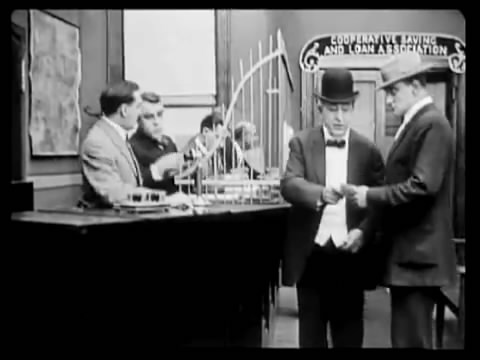
The Progressive Era response was not just prosecution but competition. The Russell Sage Foundation, established in 1907, concluded that loan sharks thrived because honest small loans were effectively illegal: usury caps were set so low that no licensed lender could profitably make them. Its answer, the Uniform Small Loan Law first drafted in 1916, let licensed lenders charge higher but regulated rates on small loans in exchange for supervision and disclosure. States adopted versions of it, credit unions spread in the same decades, and the salary lending racket shrank as legal alternatives appeared. It remains the clearest lesson in the whole history: access to fair credit, not just punishment, is what actually starves loan sharks.
The organized crime era, 1930s to 1970s
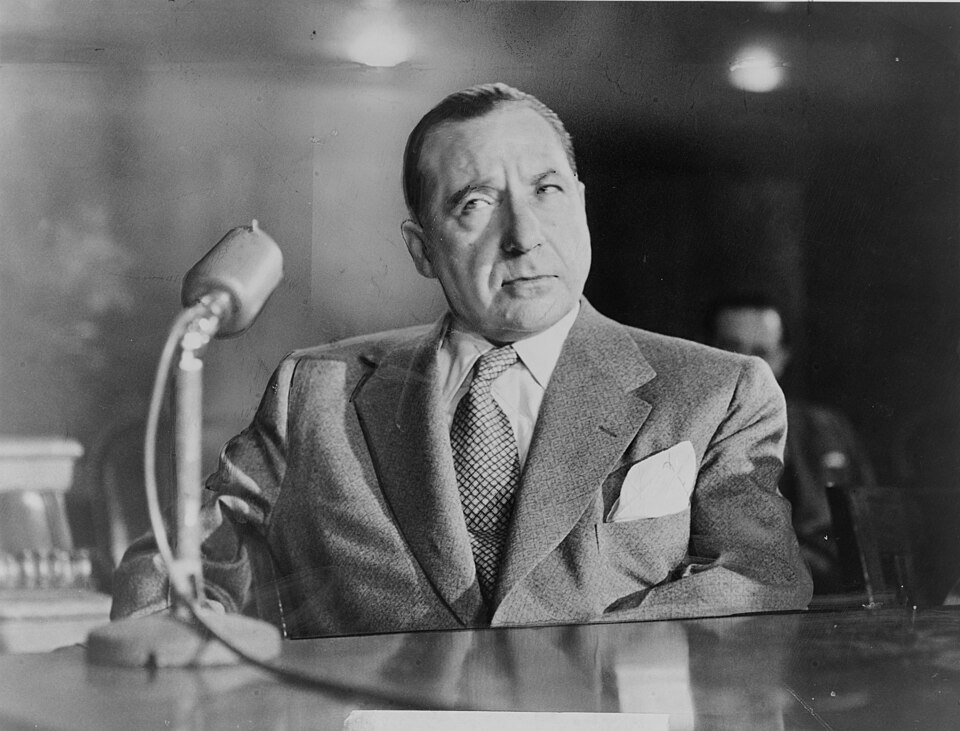
When Prohibition ended in 1933, criminal organizations rich in cash needed somewhere to put it, and lending money at six for five, five dollars borrowed on Monday against six repaid the next, became a staple racket. This is the era that fixed the modern image of the loan shark: the vig, the juice, the collector, and the debts enforced by reputation and fear rather than contracts. Loan sharking became one of organized crime’s most reliable earners and a lever for taking over legitimate businesses whose owners fell behind. That story is told in full in loan sharks and organized crime.
The law catches up, 1968 to 1970
Congressional hearings through the 1950s and 1960s put mob lending on the national agenda, and in 1968 the Consumer Credit Protection Act made extortionate credit transactions a federal crime, the statutes still found at 18 U.S.C. sections 891 through 894. RICO followed in 1970 and gave prosecutors a tool against the organizations themselves. Together with state criminal usury laws, these remain the legal backbone described in are loan sharks illegal?
Deregulation and the payday era, 1980s to 2000s
In the late twentieth century, many states loosened or restructured their usury rules, and a new legal industry grew into the space where salary lenders had once operated: payday lending, offering two week loans at fees that work out to roughly 400 percent annually. Whether that industry is a solution to loan sharking or its licensed descendant is still debated, and we compare the two honestly in loan sharks vs payday loans and in our guide to predatory lending.
The online era
Today’s loan shark is as likely to be an app as a person. Unlicensed lending websites and loan apps reach borrowers at a scale no neighborhood lender ever managed, and they have updated the old collection playbook: instead of a visit to your workplace, harvested contact lists and threats to message your family. The economics, though, are the salary lender’s economics, interest structured so the debt never ends. The modern warning signs are cataloged in how to identify a loan shark.
Why the history matters
Every era of this story ends the same way: loan sharks shrink when safe small credit expands and when borrowers know their rights. If you are reading this as more than history, our debt help page and guide to safer borrowing are the practical chapters.
Sources and further reading
This page draws on the scholarly and government literature below. For research work, cite these primary and academic sources directly wherever possible, and see our companion pages on famous loan sharks and loan sharks and organized crime for the era-by-era detail:
- Mark H. Haller and John V. Alviti, “Loansharking in American Cities: Historical Analysis of a Marginal Enterprise,” American Journal of Legal History 21, no. 2 (1977). The foundational academic study of the subject.
- Robert Mayer, Quick Cash: The Story of the Loan Shark (DeKalb: Northern Illinois University Press, 2010). The best single-volume history.
- Anne Fleming, City of Debtors: A Century of Fringe Finance (Cambridge: Harvard University Press, 2018). The definitive account of the salary lending era and its regulation.
- Russell Sage Foundation, The Loan Shark Campaign, the foundation’s own account of the Progressive Era crusade.
- “Fishing for Loan Sharks,” Perspectives on History, American Historical Association (2018).
- Loan Sharks and Loan Shark Legislation in Illinois (1916), a period investigation readable in full at the Internet Archive.
- U.S. Senate Special Committee to Investigate Organized Crime in Interstate Commerce (the Kefauver Committee), hearings and reports (1950 to 1951).
- New York State Commission of Investigation, The Loan Shark Racket (1965).
- President’s Commission on Law Enforcement and Administration of Justice, Task Force Report: Organized Crime (1967).
- John M. Seidl, “Upon the Hip: A Study of the Criminal Loan-Shark Industry” (PhD dissertation, Harvard University, 1968).
- Centre for Social Justice, Swimming with Sharks (2022), the leading study of illegal lending today. Current figures are collected on our statistics page.
Citing this page
Students and researchers are welcome to cite this page. Suggested formats:
APA: LoanSharks.com. (2026, August 27). The history of loan sharks. https://www.loansharks.com/loan-sharks/the-history-of-loan-sharks/
MLA: “The History of Loan Sharks.” LoanSharks.com, 27 Aug. 2026, www.loansharks.com/loan-sharks/the-history-of-loan-sharks/.
Chicago: LoanSharks.com. “The History of Loan Sharks.” Last modified August 27, 2026. https://www.loansharks.com/loan-sharks/the-history-of-loan-sharks/.
Historical figures and cases are described from court records and contemporary reporting. Last reviewed and expanded August 27, 2026.